Memory Could Not Be Read After Terminal
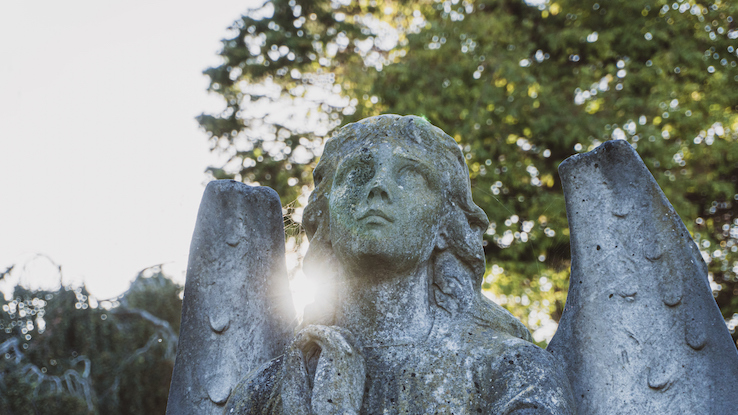
When you lot lose a loved one, it's important to laurels their memory in a mode that holds meaning for you. You might cull to arrange a memorial service that displays your respect for their life, shows how much they meant to you and helps you and others process your grief in a purposeful style. Some people choose to write their ain eulogies to read during the service, while others prefer to read a poignant poem that expresses their feelings in a heartfelt style or that helps them find the words they're having difficulty conveying. If you're searching for a verse form to read at your loved one's funeral, consider one of these five thoughtful options, each penned by a well-known poet.
"Remember" by Christina Rossetti
Born in London to an Italian poet in exile, Christina Rossetti wrote some of the most famous poems of the Victorian era. Many of her works focused on the topics of death and sadness, and one of her almost notable works is "Remember," which is often read at funerals and memorial services. The poem gives vocalisation to the person who has passed away and asks mourners to think her fondly. Notwithstanding, it also gives the mourners permission to forget her in the futurity, as the author wants her loved ones to exist happy rather than wallow in sadness later on her expiry.

An extract of this poem reads:
"Yet if you should forget me for a while
And later on remember, practise non grieve:
For if the darkness and corruption exit
A vestige of the thoughts that once I had,
Better by far yous should forget and smile
Than that you should retrieve and exist sad."
Detect the full version of "Remember" here.
Robert Frost grew up in New England and wrote at length nearly the region. His nigh famous works chronicle to nature, specifically homo's relationship with nature and the pregnant of life. That sentiment is evident in "Goose egg Gilt Can Stay," which uses the life wheel of a flower equally a metaphor for human being death. Frost's theme is that zero lasts forever, no matter how beautiful or "gold" it is. He compares death to the ruin of the Garden of Eden and the ending of a day. At viii lines, the poem is short, but it relays a message of acceptance of death'due south inevitability and appreciate of life'due south beauty.

An excerpt of this poem reads:
"So Eden sank to grief,
So dawn goes down to solar day.
Nothing gilt can stay."
Notice the full version of "Nil Aureate Tin Stay" hither.
"Crossing the Bar" by Alfred Lord Tennyson
Alfred Lord Tennyson was one of the about famous poets in the Victorian age. He grew upward in a troubled household in England and often turned to his poetry as a mode to escape his turbulent life. Throughout the years, he wrote eulogies in the form of poems for lost friends and family members. "Crossing the Bar" is a verse form he wrote after the expiry of his son, Lionel, during a time that left the poet searching for the meaning of life through religion and spirituality. He wrote this particular poem while on a boat, and it compares decease to going out to sea. It likewise mentions meeting the "Pilot's" confront later on crossing the bar, which may be a metaphor for God or a higher being.

An excerpt of this poem reads:
"Twilight and evening bell,
And subsequently that the dark!
And may there exist no sadness of goodbye,
When I embark;
For tho' from out our bourne of Time and Place
The flood may bear me far,
I promise to see my Pilot face to face
When I have crost the bar."
Find the total version of "Crossing the Bar" here.
"Because I could non stop for Death (479)" by Emily Dickinson
Massachusetts native Emily Dickinson is possibly i of the near famous American poets in history, and her poem "Because I could not cease for Decease (479)" is one of her more notable works. Often read at funerals and memorial services, the poem depicts expiry as a visitor to the person's dwelling who takes the author abroad in a carriage. Death and the author accept a ride through town, passing fields and schools before coming to a stop at her last destination. The verse form talks of the sunday setting, a house that seems to be swelling from the ground and how eternity feels like only a day.

An extract of this verse form reads:
"Because I could non cease for Death –
He kindly stopped for me –
The Railroad vehicle held but but Ourselves –
And Immortality."
Find the full version of "Considering I could not stop for Decease" here.
"A Child Said, What Is the Grass?" by Walt Whitman
Walt Whitman grew upwardly in Brooklyn and is also one of the most famous poets in the history of the U.Due south. Much of his work focuses on nature and love, and he manages to discover beauty in almost every situation, including death. That's the theme of the poem "A Child Said, What Is the Grass?" It begins with a young child asking the writer "What is grass?" He goes on to think about the various answers he tin give the child, merely he's unhappy with all the answers. Finally, he wonders what has become of all the people who died in the past who are buried under the grass, coming to the decision that the grass is proof they aren't really dead. The poem is a bit longer than the others on the listing, merely it has an uplifting message for mourners by pointing out that decease is not an terminate, simply a transition to a new affiliate.

An excerpt of this poem reads:
"What practice you lot retrieve has get of the immature and erstwhile men?
And what do you call up has go of the women and children?
They are live and well somewhere,
The smallest sprout shows in that location is actually no expiry."
Detect the full version of "A Child Said, What Is the Grass" here.
Source: https://www.questionsanswered.net/lifestyle/5-poems-to-read-at-a-memorial-service?utm_content=params%3Ao%3D740012%26ad%3DdirN%26qo%3DserpIndex
0 Response to "Memory Could Not Be Read After Terminal"
Post a Comment